GENIUS-MIDI
A generator of aligned MIDI parts: rhythm, percussion, bass, harmony, melody and controller automation for further DAW work.
Algorithmic composition · Python / MIDI / Seeded generation / Music theory
The product problem
Create a controllable compositional starting point with recorded parameters, not a finished audio-track promise.
Generator source is present; byte-level reproducibility needs a pinned version and environment check.
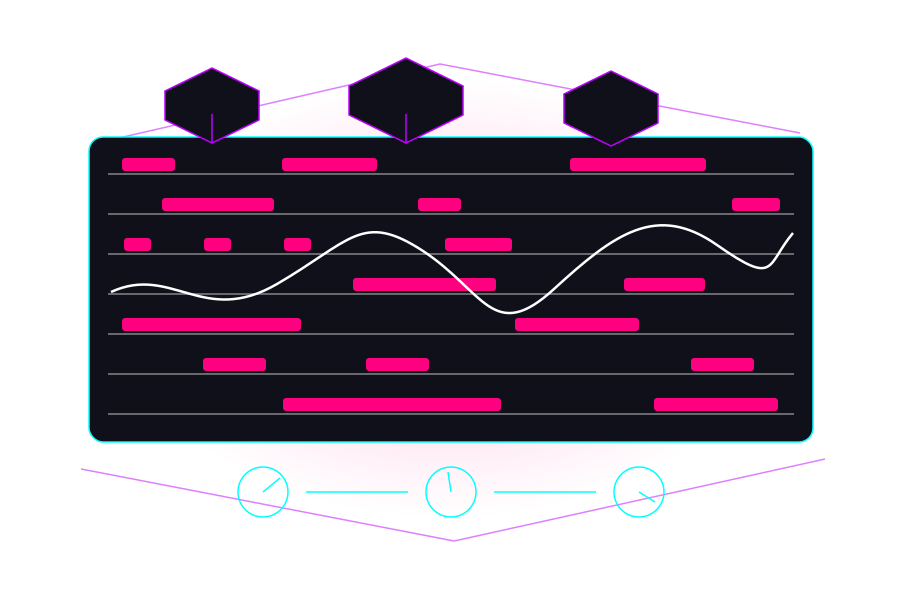
From parameters to DAW material
An illustrative intended journey, not a demonstration of the current live release.
- Choose genre, tempo, scale and length.
- Record the seed and generation settings.
- Export aligned MIDI parts and a manifest.
- Continue instrumentation, arrangement and sound work in a DAW.
System components
- Seven MIDI parts: main/glitch drums, polymetric percussion, bass, chords, topline and dynamics.
- Genre profiles, tempo, bar count, key and scale.
- Number patterns and musical heuristics shape the structure.
- A seed and manifest preserve each generation’s settings.
Architecture & ownership
A Python generator and MIDIUtil export MIDI events and a manifest. The DAW supplies instruments, synthesis, mixing and final audio.
Where does MIDI-event generation end and the composer’s artistic decision begin?
What to validate before use
Number theory is a composition principle, not a guarantee of artistic quality or listener effects. Third-party instruments are not bundled.
This describes the development scope. This page does not run the product, process payments or verify real-time availability.
Related products, distinct problems
- Golden Ratio Fractal Engine
Let a person explore mathematical form as a controllable visual environment rather than a static image.
Next step
Discuss a GENIUS-MIDI workflow
Describe the problem, current system, constraints and desired outcome. We agree scope and deliverables before cost and launch.
Discuss the task on Telegram ↗The link opens a human contact; it does not send a message automatically.